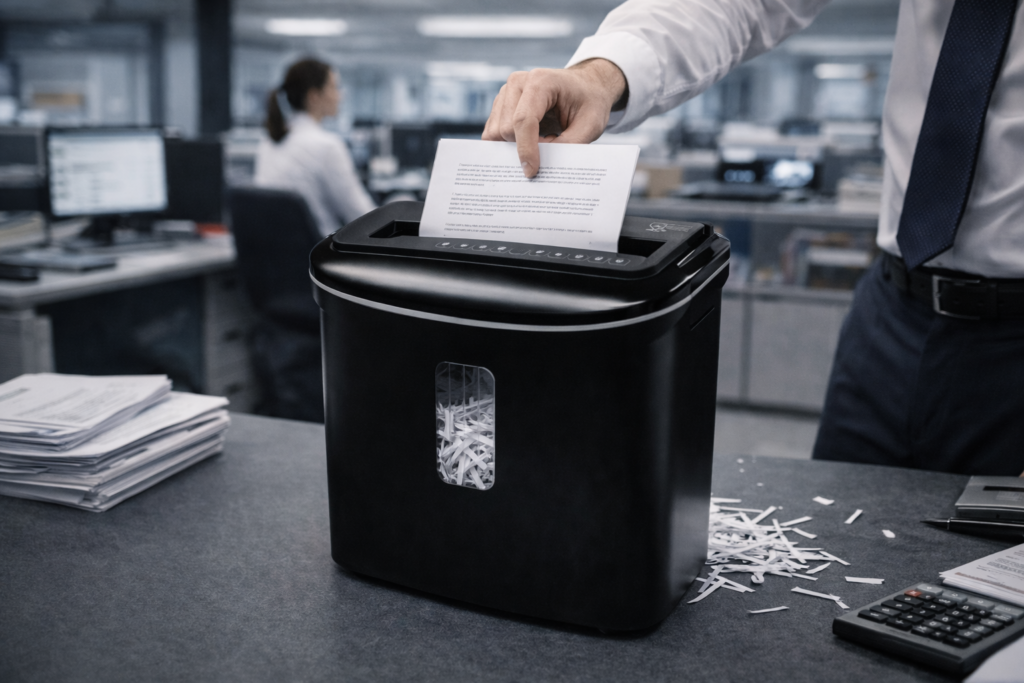
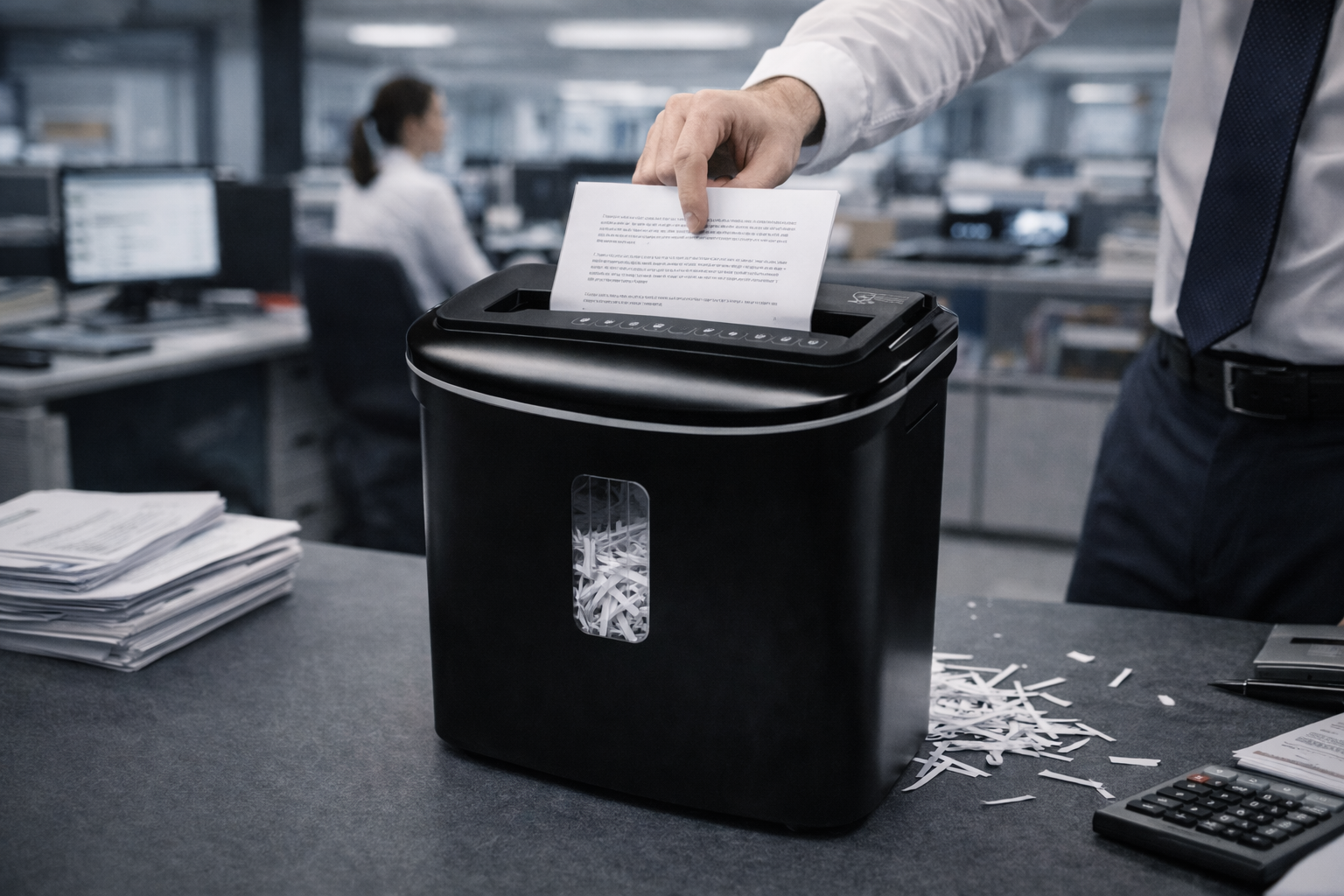
Most businesses obsess over firewalls and passwords, but ignore the pile of printed invoices, HR documents, and client data sitting on desks. That’s a liability waiting to be picked up—literally.
A paper shredder isn’t office equipment. It’s a security device.
In a typical office, documents contain names, phone numbers, bank details, contracts, internal strategies. Throwing them away intact is equivalent to handing them to strangers. Shredding destroys that risk at the physical level.
There’s also compliance. Regulations around data protection (even in India, under evolving DPDP frameworks) increasingly expect businesses to handle sensitive information responsibly. Shredding becomes part of that compliance layer.
Then comes productivity. Instead of storing unnecessary paperwork “just in case,” teams can confidently dispose of documents. Less clutter. Faster workflows. Cleaner desks.
And here’s the subtle part: psychology. A clean workspace signals discipline. Discipline reflects in operations. Operations reflect in revenue.
A shredder quietly enforces that system.